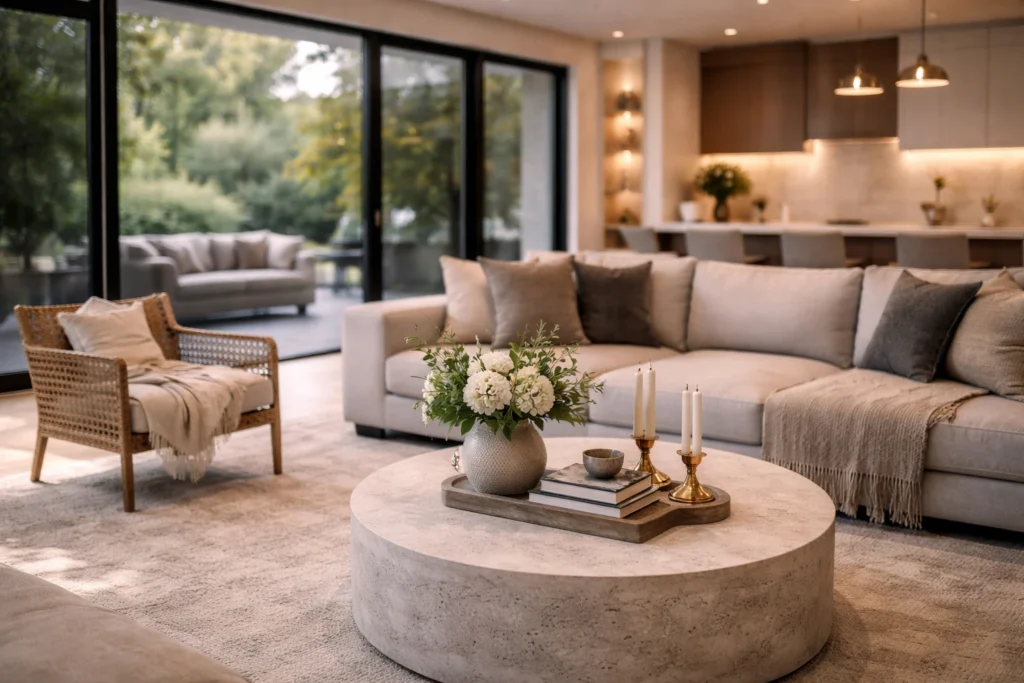
Designing for Lifestyle, Not Just Space
Designing for lifestyle, not just space, means creating environments that support how people actually live, work, relax, and connect — rather than simply focusing on square footage or aesthetics. Modern design is shifting from “How big is the room?” to “How does this space improve daily life?”
A lifestyle-centered design approach considers routines, habits, emotions, and flexibility. For example, an open kitchen may encourage family interaction, a quiet reading corner can support mental wellness, and multifunctional furniture helps adapt small apartments for work, exercise, and entertainment. The goal is to make spaces feel intuitive, comfortable, and personal.
This concept has become especially important as homes now serve multiple purposes — office, gym, classroom, and sanctuary. Designers are responding with smarter layouts, natural lighting, wellness-focused materials, and adaptable spaces that evolve with changing needs. Technology also plays a role, with smart systems enhancing convenience and efficiency without overwhelming the user experience.
Ultimately, designing for lifestyle means understanding people before designing places. A successful space is no longer measured only by how it looks, but by how well it supports the life happening inside it.